If you have been browsing homes in the Inner Mission, you have probably noticed that two listings with similar square footage can come with very different ownership structures. One may be a condo, another a loft, and another a TIC. That can feel confusing fast, especially when you are trying to compare value, financing, and long-term flexibility. In this guide, you will get a clear, practical breakdown of what each option means in the Inner Mission and what to look at before you make a move. Let’s dive in.
Why Inner Mission Has All Three
The Inner Mission has a housing mix that reflects the neighborhood’s history. San Francisco Planning describes the Mission District as a dense, mixed-use area with a long working-class history and a strong Latino cultural identity. It also notes that the northeast Mission developed separately with a more commercial and industrial character.
That history helps explain why you see such a varied housing stock today. In the Inner Mission, buyers often encounter older flats that are commonly sold as TICs, purpose-built condo buildings, and loft-style homes with industrial details. In other words, the ownership structure often connects to the age, layout, and original use of the building.
Inner Mission Condos Explained
A condominium in California is separately owned in fee and transferred by deed. The unit is identified in a recorded condominium plan, and you also own an undivided interest in the common areas. When you buy the condo, membership in the homeowners association transfers with the property.
For many buyers, condos feel the most familiar because the ownership structure is standardized. The HOA operates under recorded CC&Rs, bylaws, and a board that manages common areas and can levy assessments. That framework can make it easier to understand how the building runs, what rules apply, and how shared costs are handled.
In the Inner Mission, newer condo buildings often pair that structure with amenities that appeal to urban buyers. A public example is 1188 Valencia Street, a newer five-story condo building with 49 units, garage parking, private balconies, a community roof deck, and street-level retail. That kind of property tends to offer a more predictable ownership model along with modern building features.
What condo buyers should review
Before you buy a condo, pay close attention to the building documents and monthly costs. The legal structure may be straightforward, but the details still matter.
- CC&Rs and bylaws
- Monthly HOA dues
- Rules on rentals and short-term stays
- Recent or planned assessments
- Building maintenance and common-area condition
California law limits some rental restrictions in common-interest developments, but HOAs may still prohibit short-term rentals under 30 days. That means you should read the building rules carefully if flexibility is important to you.
Inner Mission Lofts Explained
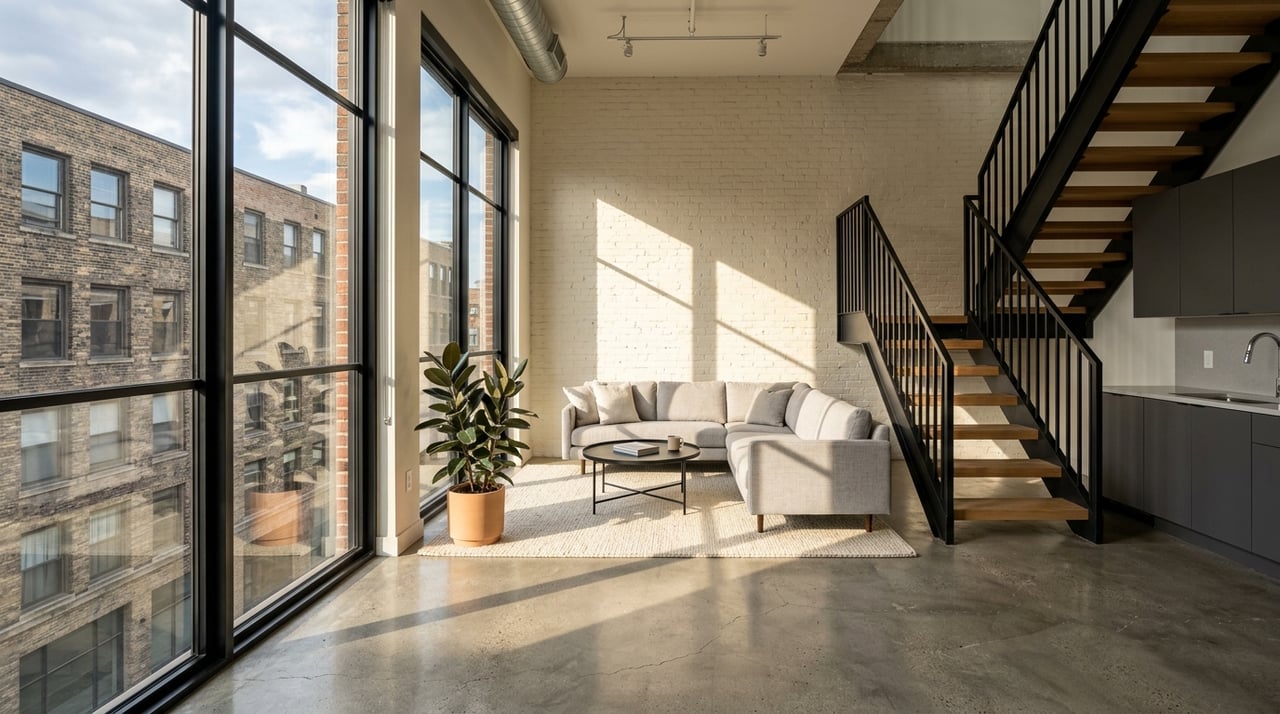
In the Inner Mission, a loft is usually a style of home rather than a separate form of ownership. Many lofts are condo lofts, which means the ownership can function much like a condo while the living experience feels very different. The term usually points to design features such as open living space, high ceilings, large windows, and industrial materials like brick, timber, or exposed structure.
That distinction matters because buyers sometimes assume loft means a special legal category. In practice, you usually want to ask two separate questions. First, what is the ownership structure? Second, what is the unit style and layout?
Public examples in the Inner Mission show how lofts stand out visually. At 730 Florida Street, loft-condo homes have open living areas, soaring ceilings, select views, a private patio, in-unit laundry, and parking. At 720 York Street in the Mill Building, converted loft space includes brick-and-timber character, wood floors, brick walls, peaked timber ceilings, a skylight, and parking.
Why buyers are drawn to lofts
Lofts often appeal to buyers who value volume, light, and architectural character. The open plan can feel dramatic and flexible, especially in a dense urban neighborhood. If you want a home with industrial texture and a less conventional layout, a loft may offer something a standard condo does not.
At the same time, style comes with tradeoffs. Open layouts can mean less separation between living, working, and sleeping spaces. If you are comparing a loft to a more traditional condo, think about how you actually live day to day, not just how the space feels during a showing.
Inner Mission TICs Explained
A TIC, or tenancy in common, is an undivided-interest form of ownership. Instead of owning a separately deeded unit, you own a fractional interest in the parcel and receive occupancy rights through a TIC agreement. That agreement should spell out who occupies which unit, how property taxes are divided, and how the building is managed.
This is one of the most important distinctions in the Inner Mission market. Many older flats are sold as TICs, especially in smaller buildings where the homes may feel similar to condos in daily use but differ significantly in legal structure. The California Department of Real Estate notes that TIC formation does not require recordation of documents or local-agency approval in the same way a condo structure does.
That flexibility is part of why TICs exist in San Francisco, but it also means buyers need to review the agreement carefully. Governance is contractual rather than HOA-based. In some cases, TIC agreements also set approval thresholds for refinancing during the first five to ten years.
Public Inner Mission examples include boutique TIC offerings such as 2942 22nd Street and 938 Hampshire Street. These examples highlight features buyers often like in older buildings, such as full-floor flats, original details, shared outdoor space or storage, parking, in-unit laundry, seismic retrofits, and solar panels.
What makes TICs different in practice
The day-to-day experience of a TIC can feel very similar to owning a flat in a small building. The difference shows up most in financing, decision-making, and resale.
Here are a few practical questions to ask when considering a TIC:
- How is the building managed?
- How are monthly expenses split?
- What does the TIC agreement require for repairs or major decisions?
- Are there refinance restrictions?
- What loan options are available for this property?
Financing Is Often the Biggest Difference
For many buyers, financing is where the condo versus TIC decision becomes real. Condos and condo-style lofts usually fit the standard mortgage framework more cleanly because the unit is separately deeded. TICs can require specialty underwriting, and the California Department of Real Estate specifically notes that owners may find it difficult to finance their interests.
That does not mean TIC financing is impossible. Local lenders do offer TIC loans in San Francisco, including owner-occupied fractional TIC financing. Still, the buyer pool is often narrower because not every lender handles these properties and not every buyer wants that extra complexity.
If you are comparing options in the Inner Mission, financing should not be an afterthought. It affects your monthly payment, your lender choices, your resale audience, and how competitive you can be when you write an offer.
Governance and Monthly Risk
Beyond financing, the next big difference is how decisions get made. In a condo, the HOA provides the formal governance structure through CC&Rs, bylaws, a board, and assessment powers. That does not mean every condo building runs perfectly, but it does mean there is a defined system for rules, budgets, and shared maintenance.
In a TIC, governance comes from the TIC agreement. That agreement may address occupancy, expense sharing, repair responsibilities, and decision-making rules. Because the structure is contractual, the quality and clarity of that agreement matter a great deal.
From a buyer’s perspective, this is really about monthly risk and predictability. You want to understand who pays for what, how disputes are resolved, and what happens if a major building expense comes up.
Resale and Rental Considerations
When you buy in the Inner Mission, it helps to think beyond move-in day. Condos often appeal to a broader resale audience because the ownership structure is widely understood and financing is more standardized. TIC resales can be narrower because fewer buyers are comfortable with the financing and governance model.
Rental rules also deserve close review. For condos and other common-interest developments, California law allows HOAs to prohibit short-term rentals under 30 days even while limiting some other rental restrictions. That means the building documents remain a key part of your due diligence.
With TICs, the rental and occupancy picture may depend on the TIC agreement and the practical dynamics among co-owners. If future flexibility matters to you, review those terms early rather than assuming all property types work the same way.
How to Compare Condos, Lofts, and TICs
If you are deciding between these three options in the Inner Mission, it helps to separate the emotional appeal from the structural realities. A beautiful loft may check the style box. A TIC may offer classic flat charm. A newer condo may provide cleaner financing and governance.
The best fit depends on your priorities. Start with the issues that will affect your daily life and long-term options the most.
| Property type | Usually best known for | Main advantage | Main caution |
|---|---|---|---|
| Condo | Standardized ownership | Separately deeded unit and formal HOA structure | HOA dues, rules, and possible assessments |
| Loft | Open, industrial-style living | Volume, light, and architectural character | Layout may be less traditional than a standard condo |
| TIC | Older flats in smaller buildings | Access to distinctive homes and building character | More complex financing and contractual governance |
A Smart Buying Approach in the Inner Mission
The Inner Mission offers one of the most interesting housing mixes in San Francisco. That is part of the neighborhood’s appeal. You can find newer condo buildings, dramatic loft spaces, and older flats with period detail, often within a few blocks of each other.
The key is knowing that these homes are not interchangeable just because they look comparable online. Ownership structure, financing path, governance, and resale audience can all shape the real value of a purchase. When you understand those differences early, you can compare homes with much more confidence and make a decision that fits both your lifestyle and your financial goals.
If you are weighing a condo, loft, or TIC in the Inner Mission, working with an advisor who understands San Francisco micro-markets and ownership structures can save you time and help you avoid expensive surprises. To discuss your options with a clear strategy, Brendon Kearney can help you evaluate the right fit for your goals.
FAQs
What is a condo in the Inner Mission?
- A condo is a separately deeded unit with shared ownership in common areas, and it is typically governed by an HOA with CC&Rs, bylaws, and a board.
What is a loft in the Inner Mission real estate market?
- In the Inner Mission, a loft is usually a style of home with open space, high ceilings, large windows, and industrial character, and it is often owned as a condo rather than as a separate legal category.
What is a TIC in the Inner Mission?
- A TIC is a tenancy in common, which means you own a fractional interest in the property and receive occupancy rights through a TIC agreement instead of owning a separately deeded unit.
Why is financing different for Inner Mission TICs?
- TICs often require specialty underwriting, and the California Department of Real Estate notes that owners may find it difficult to finance their interests compared with standard condos.
Are lofts and condos the same thing in the Inner Mission?
- Not always, because loft usually describes the layout and style of the home, while condo describes the legal ownership structure.
What should buyers review before buying an Inner Mission condo or TIC?
- Buyers should review the ownership documents, monthly obligations, management structure, rental rules, and any financing or refinance restrictions that apply to the property type.